


Content
These are longer-term obligations, though they can be current liabilities or long-term liabilities. A current liability is one that is paid off within one year. A long-term liability is typically a larger sum that requires multiple years to pay down. One of the main differences between expenses and liabilities are how they’re used to track the financial health of your business.
Tangible assets are the items that can easily be valued, while intangible assets are the things that can bring value to a business but are not physical in form. Intangible assets include intellectual property, such as copyrights and patents, which is difficult to value.
What Is A Liability Account?
For a more developed treatment of the possibilities, please read the descriptions presented in Chapter 15, Other Assets of this Guide. Show general ledger pending entries to review debit/credit entries. Click on the search icon to download results to Excel if the e-doc is large. However, you can use this very powerful tool to drill down to review activity. Units do not need to reconcile the generated offset object codes 1000 and 2900. Stay updated on the latest products and services anytime, anywhere. This results in the business incurring a compensation expense for these yet-to-be-paid workdays.
- Therefore, contingent liabilities are potential liabilities.
- When using accrual accounting, you’ll likely run into times when you need to record accrued expenses.
- A freelance social media marketer is required by her state to collect sales tax on each invoice she sends to her clients.
- As a practical example of understanding a firm’s liabilities, let’s look at a historical example using AT&T’s balance sheet.
- But our editorial integrity ensures our experts’ opinions aren’t influenced by compensation.
- When presenting liabilities on the balance sheet, they must be classified as either current liabilities or long-term liabilities.
Current liabilities are usually considered short-term and non-current liabilities are long-term . The most common types of liabilities are accounts payable and loans payable. Wages payable, interest payable and unearned revenue are also liabilities. As a small business owner, you need to properly account for assets and liabilities. If you recall, assets are anything that your business owns, while liabilities are anything that your company owes. Your accounts payable balance, taxes, mortgages, and business loans are all examples of things you owe, or liabilities.
Accounting Reporting Of Liabilities
They consist of the expenditures you have to pay to keep your business operating on a day-to-day basis. Merchants Accept payments from anywhere—at your brick-and-mortar store, on your website, or even from a mobile phone or tablet. Because the corporation is obligated to pay this wage, it is a liability. The Ascent is a Motley Fool service that rates and reviews essential products for your everyday money matters.
You should keep in mind that liabilities are financial obligations, not just debt. All debts are financial obligations, but not all financial obligations are debts. For example, let’s say you lease a small retail space downtown and must pay rent on a monthly basis and not in arrears – in other words, May’s rent is due on May 1, not June 1. Your rent obligation is a financial obligation, and therefore a liability, but it is not a debt because you pay for the use of the property for the month before you use it. Let’s say that you pay for one of your employees to fly somewhere to meet a supplier in person. This trip would entail paying for a flight, lodging and meals.
Liabilities are amounts owed by a corporation or a person to creditors for past transactions. Whenever a transaction is made on credit, a liability is created. In other words, a company must pay the other party at an agreed future date. Balances in liability accounts are usually credit balances. This means that debit entries are made on the left side of the T-account which decrease the account balance, while credit entries on the right side will increase the account balance. Liabilities are any debts your company has, whether it’s bank loans, mortgages, unpaid bills, IOUs, or any other sum of money that you owe someone else. Note that a long-term loan’s balance is separated out from the payments that need to be made on it in the current year.
Pricing will vary based on various factors, including, but not limited to, the customer’s location, package chosen, added features and equipment, the purchaser’s credit score, etc. For the most accurate information, please ask your customer service representative. Clarify all fees and contract liability accounts details before signing a contract or finalizing your purchase. Each individual’s unique needs should be considered when deciding on chosen products. Usually, accounts payable have a term of 30 days, but some suppliers may offer a business more lenient terms due to their amicable relationship.
Other Current Liability Account Register
The company, on the other hand, upon depositing the cash with the bank, records a decrease in its cash and a corresponding increase in its bank deposits . Long-term liabilities – these liabilities are reasonably expected not to be liquidated within a year. They usually include issued long-term bonds, notes payables, long-term leases, pension obligations, and long-term product warranties.
Good management of accounts receivable helps in ensuring the profitability as well as survivability of the business. It is what the business uses to pay for expenses as well as liabilities. Current assets are a business’s most liquid assets, with cash being the most liquid of them all.
At the same time, the cash account would be debited with the $100,000 of cash from the loan. In the case of non-payment creditors has the authority to claim or confiscate the company’s assets.
Types Of Liabilities: Non
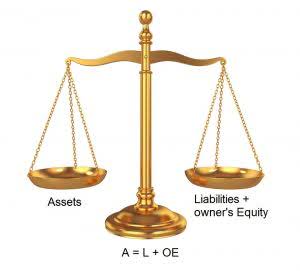
The higher it is, the more leveraged it is, and the more liability risk it has. See how Annie’s total assets equal the sum of her liabilities and equity? If your books are up to date, your assets should also equal the sum of your liabilities and equity. However, if the lawsuit is not successful, then no liability would arise. In accounting standards, a contingent liability is only recorded if the liability is probable (defined as more than 50% likely to happen). The amount of the resulting liability can be reasonably estimated.
The difference between payable and liability is that accounts payable is a type of liability, but there are other types of liabilities as well, like payroll expenses, according to Harvard Business School. Generally speaking, accounts payable are the result of your company purchasing goods and services from a vendor on credit rather than cash. Purchasers record accounts payable on their balance sheets as current liabilities, which represent financial claims against the company’s assets. These are short-term debts, with a clear due date that’s usually 90 days or less, but can be as long as a year. A liability is a financial obligation of a company that results in the company’s future sacrifices of economic benefits to other entities or businesses. A liability can be an alternative to equity as a source of a company’s financing.

Clear and accurate accounts payable entries are essential to the strategic and competitive health of your business. Tied firmly to cash flow, every account payable journal entry bears a direct impact on working capital (current assets – current liabilities). The Balance sheetsprovide a snapshot of the company’s finances, listing assets, liability, and equity for a company. The balance sheet is typically used to calculate the net worth of the business, and includes liabilities, cash, and equipment.
Company
Short term credit is a common phenomenon amongst companies. Often companies buy raw materials or other goods on credit.
- She is a small business contributing writer for a finance website, with prior management experience at a Fortune 100 company and experience as a web producer at a news station.
- Read on to learn all about the different types of liabilities in accounting.
- Once the vendor provides the inventory, you typically have a certain amount of time to pay the invoice (e.g., 30 days).
- You pay off expenses in real-time because they’re necessary for ongoing business operations.
- Examples of expenses are a meal at a restaurant, rent, groceries, gas for your car, or tickets to see a play.
Below are examples of metrics that management teams and investors look at when performing financial analysisof a company. In short, there is a diversity of treatment for the debit side of liability accounting. The offsetting debit is to the wage expense account, and reflects earned but unpaid hours at the end of the reporting period. Deferred revenue is an advance payment for products or services that are to be delivered or performed in the future. For instance, a company may take out debt in order to expand and grow its business. Or, an individual may take out a mortgage to purchase a home. For example, if a company has more expenses than revenues for the past three years, it may signal weak financial stability because it has been losing money for those years.
Liabilities are categorized as current or non-current depending on their temporality. They can include a future service owed to others (short- or long-term borrowing from banks, individuals, or other entities) or a previous transaction that has created an unsettled obligation. The most common liabilities are usually the largest like accounts payable and bonds payable. Most companies will have these two line items on their balance sheet, as they are part of ongoing current and long-term operations. Liabilities are the financial obligations owed by a business to other persons, businesses, and governments.
- The two main types of liabilities are short-term liabilities and long-term liabilities.
- Net pay is the employee’s gross earnings less mandatory and voluntary deductions.
- This can include things such as payments owed for goods or services received on credit, debt that needs to be repaid within a year, and dividends that have been declared but not yet paid.
- What inventory represents will depend on the business itself.
Examples of contingent liabilities are the outcome of a lawsuit, a government investigation, or the threat of expropriation. The offsetting debit is the accounts receivable account, which is where the sales tax billing to the customer is located.
Liabilities Defined
Accumulated depreciation represents the total amount of depreciation that is already charged off of an asset. An example of an intangible asset is a patent, which can give a business a competitive edge. Those that don’t have physical forms are intangible assets. Those that have physical forms are tangible or fixed assets. What inventory represents will depend on the business itself. These properties provide the business with economic benefits. By separating each account by several numbers, many new accounts can be added between any two while maintaining the logical order.
Common Types Of Liabilities
If you are pre-paid for performing work or a service, the work owed may also be construed as a liability. There are five types of accounts https://www.bookstime.com/ that show up on both your balance sheet and income statement. They consist of assets, liabilities, equity, revenue and expenses.
What Are The Main Types Of Liabilities?
Liabilities in business often center on two categories, current liabilities and long-term liabilities. Current liabilities are short-term financial obligations due within 12 months or sooner.
Popular Posts
Ago
16


Recent Comments